
Biochar for healthy soils: the basics explained

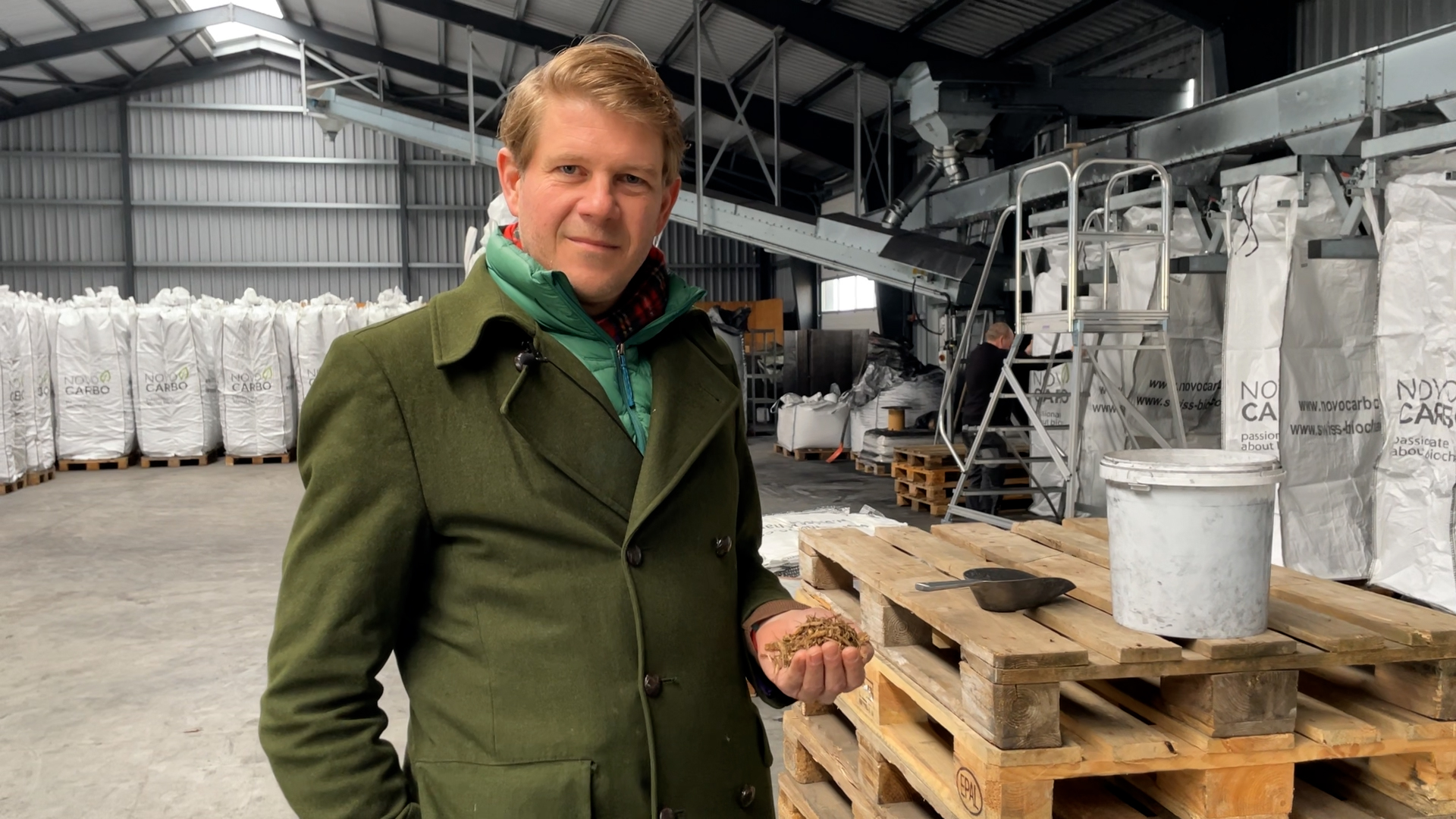
Florian Lage holding biomass at the biochar production

Drought and heavy rainfall are putting increasing pressure on soils. Whether in agriculture or urban environments, soils need to retain more water, support healthy plant growth under challenging conditions and remain productive over the long term.

Biochar can help address these challenges. In our video series, our colleague Florian – a trained farmer, Sales Manager and expert in soil systems – explains the fundamentals of biochar and how it can be used in agriculture and blue-green infrastructure.

What makes biochar a sustainable soil amendment?

You are currently viewing a placeholder content from YouTube. To access the actual content, click the button below. Please note that doing so will share data with third-party providers.

Provider Information

Biochar helps improve soil structure while increasing the soil’s ability to retain water and nutrients. This helps plants cope better with dry conditions and other environmental stresses.

Its benefits are particularly valuable in blue-green infrastructure, including urban trees, green roofs and stormwater management systems, where it supports the development of climate-resilient soil systems. For these reasons, biochar is also gaining importance in horticulture, viticulture and arable farming.

How is biochar produced, and what makes it an ideal form of storage?

You are currently viewing a placeholder content from YouTube. To access the actual content, click the button below. Please note that doing so will share data with third-party providers.

Provider Information

Biochar is produced through pyrolysis. Organic residual biomass, such as wood and other biogenic by-products, is converted under oxygen-limited conditions, creating a highly porous material with an exceptionally large internal surface area.

It is precisely this pore structure that makes biochar so special: it aerates the soil, absorbs water, stores nutrients, and at the same time provides a habitat for numerous microorganisms. Thus, it supports natural processes in the soil and contributes to an active soil ecosystem.

Why is not all biochar the same?

You are currently viewing a placeholder content from YouTube. To access the actual content, click the button below. Please note that doing so will share data with third-party providers.

Provider Information

Biochar is not a standardized product. Its properties depend on both the feedstock and the production process, which means characteristics such as water holding capacity, nutrient retention and carbon content can vary significantly.

For this reason, recognized quality standards play an important role. The European Biochar Certificate (EBC) provides transparency regarding production methods, feedstock and quality parameters, helping users choose biochar that is suitable for its intended application.

How is biochar mixed into soils and growing media?

You are currently viewing a placeholder content from YouTube. To access the actual content, click the button below. Please note that doing so will share data with third-party providers.

Provider Information

Incorporating biochar into existing soils or growing media is straightforward. On a small scale, it can simply be mixed into the soil by hand, while larger applications can use standard mixing equipment. In most cases, existing working processes do not need to be changed.

The appropriate mixing ratio depends on the application. As a general guideline, biochar is often incorporated into growing media at around 30 %. However, the ideal proportion will always depend on the intended use and the desired properties of the soil or growing medium.

Which type of biochar is best for your application?

You are currently viewing a placeholder content from YouTube. To access the actual content, click the button below. Please note that doing so will share data with third-party providers.

Provider Information

NutriChar Pellets are produced from biogas digestate and naturally contain valuable nutrients such as phosphorus and potassium. Their pellet form makes them easy to store, transport and apply with minimal dust generation.

WoodChar Classic is produced from wood and has an exceptionally large internal surface area. This allows it to retain even greater amounts of water and nutrients. Before application, it is recommended to charge the biochar with nutrients, for example by mixing it with compost.

Depending on the application, biochar can also replace conventional substrate additives such as expanded clay, perlite and vermiculite while permanently storing stable carbon in the soil.

Share this post on
Scroll to Top